Silicon
Threadripper Halo Station vs DGX Station: what the memory specs mean
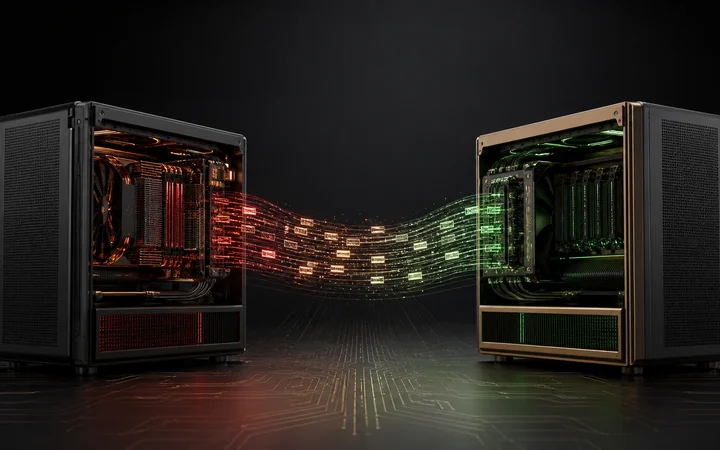
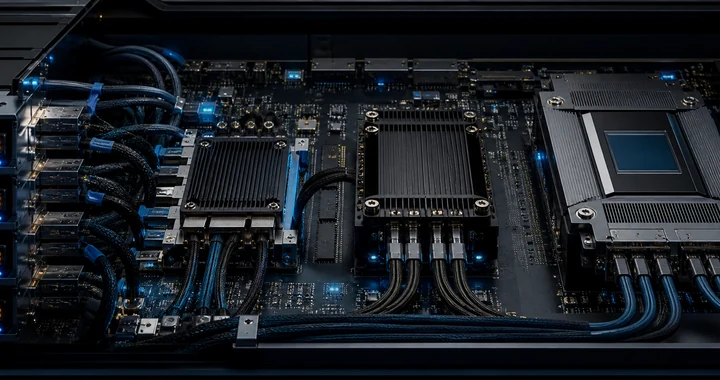
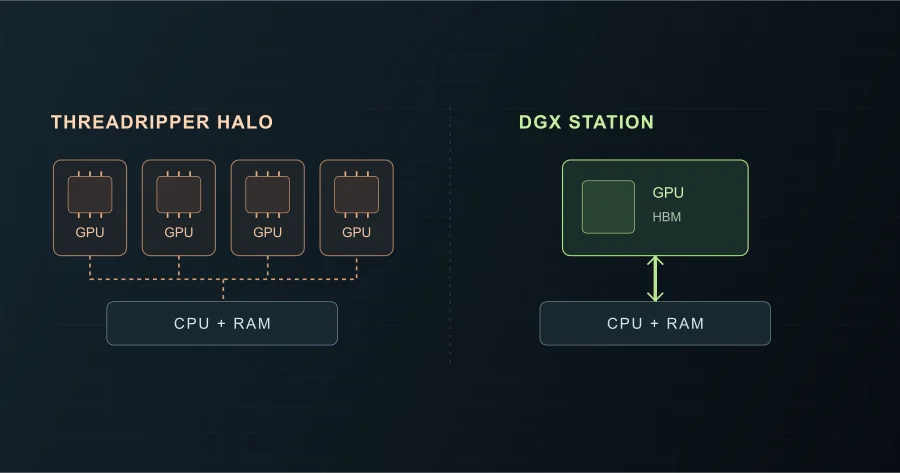
Your model has outgrown one GPU. AMD and NVIDIA offer different ways to make room, but total memory alone will not tell you which system fits your work.
Deep dives
Every LeCompute article available in English: silicon, inference runtimes, edge AI, costs and system observability.
27 articles in English , page 1 of 3
Silicon
Your model has outgrown one GPU. AMD and NVIDIA offer different ways to make room, but total memory alone will not tell you which system fits your work.
Runtimes
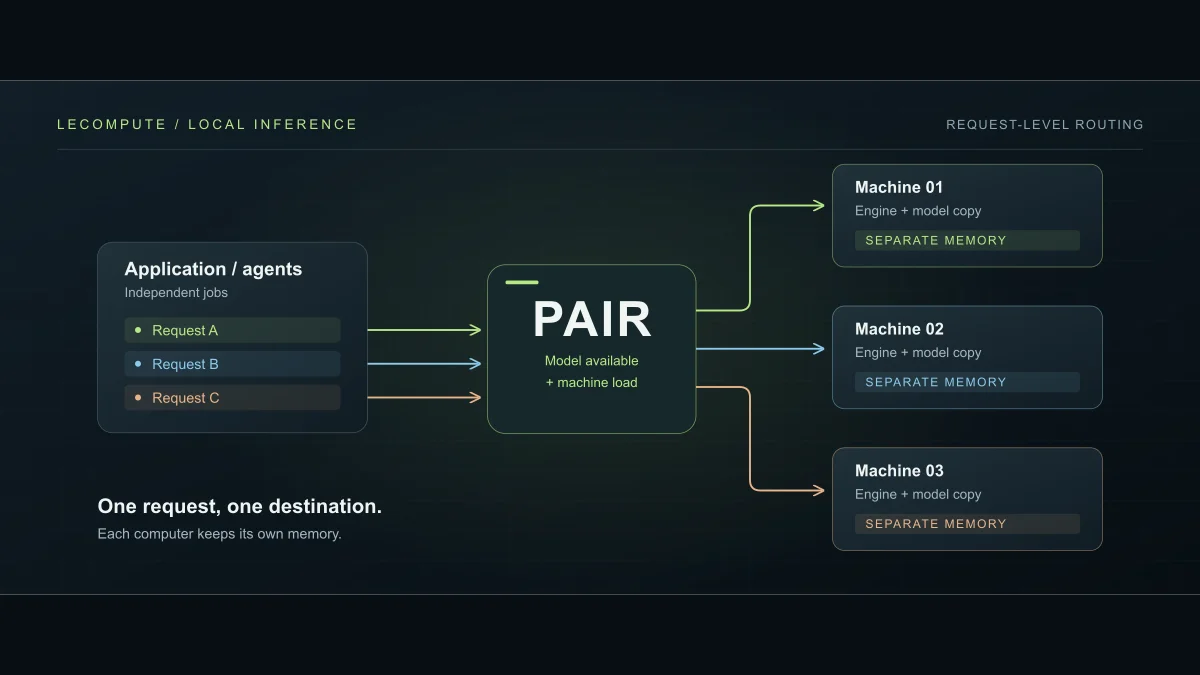
Your GPU is busy while another computer sits idle. NVIDIA PAIR can send it requests, but whether you finish sooner depends on how the work is shared.
Silicon
Ryzen AI Halo and DGX Spark both offer 128 GB, but performance changes with model and protocol. Vendor claims and independent LLM tests, audited.
Silicon
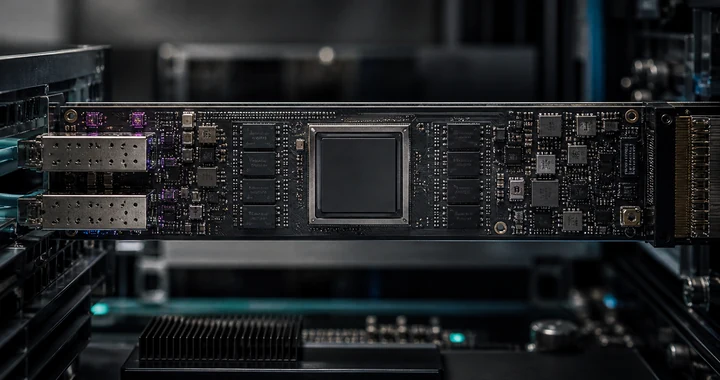
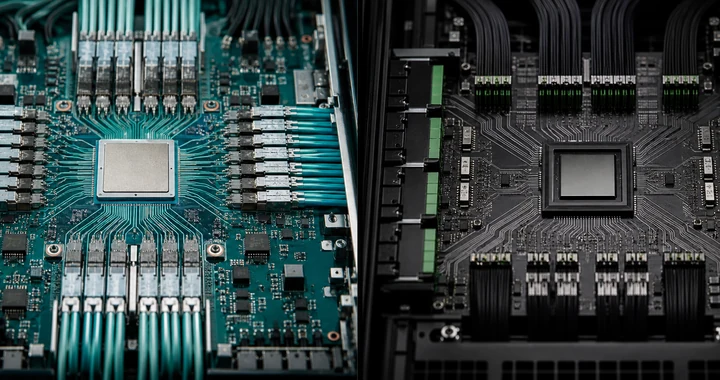
BlueField-4 and Pensando Salina compute no tokens. They move networking, storage, security and selected KV-cache transfers away from the host CPU. Here is the data path that can free the GPU, or merely move the bottleneck.
Costs
MLPerf Endpoints measures an inference service through its API at several load levels. Version 0.7 finally traces the curve between throughput, TTFT, TPOT and quality, but it does not normalize cost yet.
Runtimes
MLPerf E2E-RAG times ingestion, retrieval, reranking and four LLM roles inside a multi-hop loop. Its throughput is comparable, but the Offline scenario and 35% reference accuracy bound the verdict.
Silicon
UALink 2.0 standardizes compute inside the network; NVLink 6 integrates it into its switches. Here is what the mechanism changes, and why Helios and Vera Rubin still cannot be ranked.
Runtimes
Expert parallelism moves tokens to weights. DWDP reverses the path, prefetching remote expert weights and removing cross-rank synchronization. The bet works inside a narrow regime.
Silicon
Apple launched the M3 Ultra Mac Studio with 256 GB and 512 GB options. Only 96 GB remains. The chip did not get slower, but an entire class of local models has left the store.
Silicon
An RTX PRO 6000 and three RTX 5090s each add up to 96 GB of GDDR7. For an LLM, that is where the equality ends: one pool, one sharded model and three independent replicas pay different costs.
Runtimes
vLLM 0.27 lets every engine serve CPU-resident KV blocks to another peer over NIXL, filters tiers per request and emits routable cache events. The mechanism is shipped; the production speedup is not proven.
Silicon
RTX Spark brings up to 128 GB of unified memory and native CUDA to Windows on Arm. As of August 12, CUDA remains a developer preview, TensorRT-RTX is ready, and the LLM serving stack still needs qualification.