
Featured
Alibaba wants to supply the chip, model and cloud. What choices remain?
Alibaba is bringing chips, models and agent services together. Open weights preserve some choice; adaptations and application state determine what can move elsewhere.
Featured
Alibaba is bringing chips, models and agent services together. Open weights preserve some choice; adaptations and application state determine what can move elsewhere.
LeCompute is a French publication that dissects AI infrastructure: GPUs and silicon, HBM memory and interconnects, inference runtimes like vLLM and llama.cpp, quantization and edge AI. Technical analysis and reproducible benchmarks, from the silicon to the code, no hype.
Lire nos articles en françaisKernel & Perf
An agent finishes a patch, then waits for test machines to fetch the code. Scion provides a starting point for understanding that hidden cost and the infrastructure choices behind it.
Kernel & Perf
FlashAttention-4 keeps evolving on Blackwell. Between matrix products, softmax and data movement can determine how fast the kernel progresses.
Silicon
AMD challenges NVIDIA Vera with EPYC Venice. Agent tool execution puts CPUs in focus, but per-core, server and rack estimates measure different things.
Costs
Google, NVIDIA and Emerald AI want power flexibility to unlock faster grid connections. Who guarantees the promised reductions?
Costs
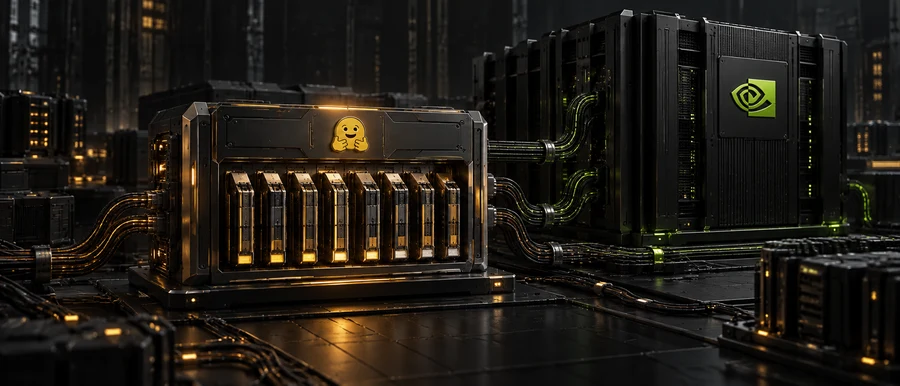
NVIDIA promises to keep Hugging Face open. Who will shape the easiest paths to choosing and deploying a model?
Silicon
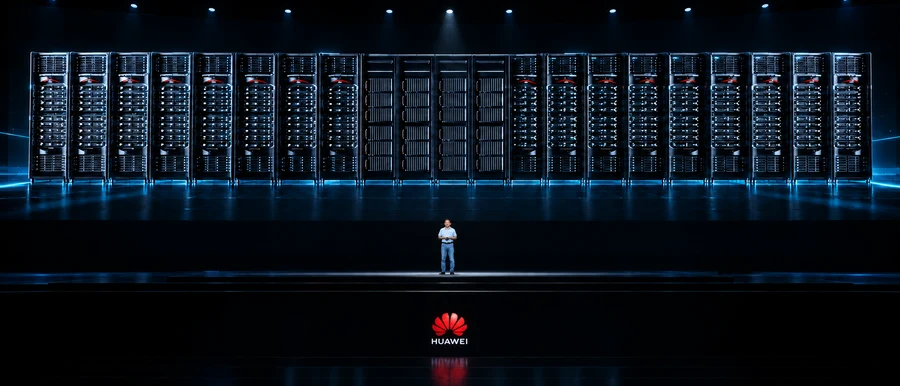
Huawei has announced Atlas 960E with up to 4,096 accelerators. Can competition move from the chip to the whole system?