
A coding agent has proposed a patch. The model has finished generating text, but the job is still waiting: someone has to compile the code, run the tests and inspect their results before accepting the change. During that part of the task, faster GPU Graphics Processing Unit. A processor designed to run many computations in parallel, used for tasks including training and running AI models. inference is only part of the story.
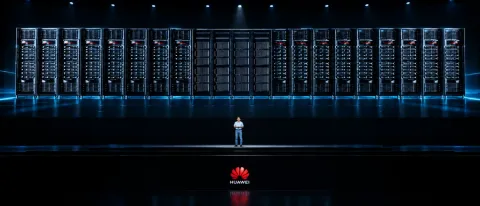
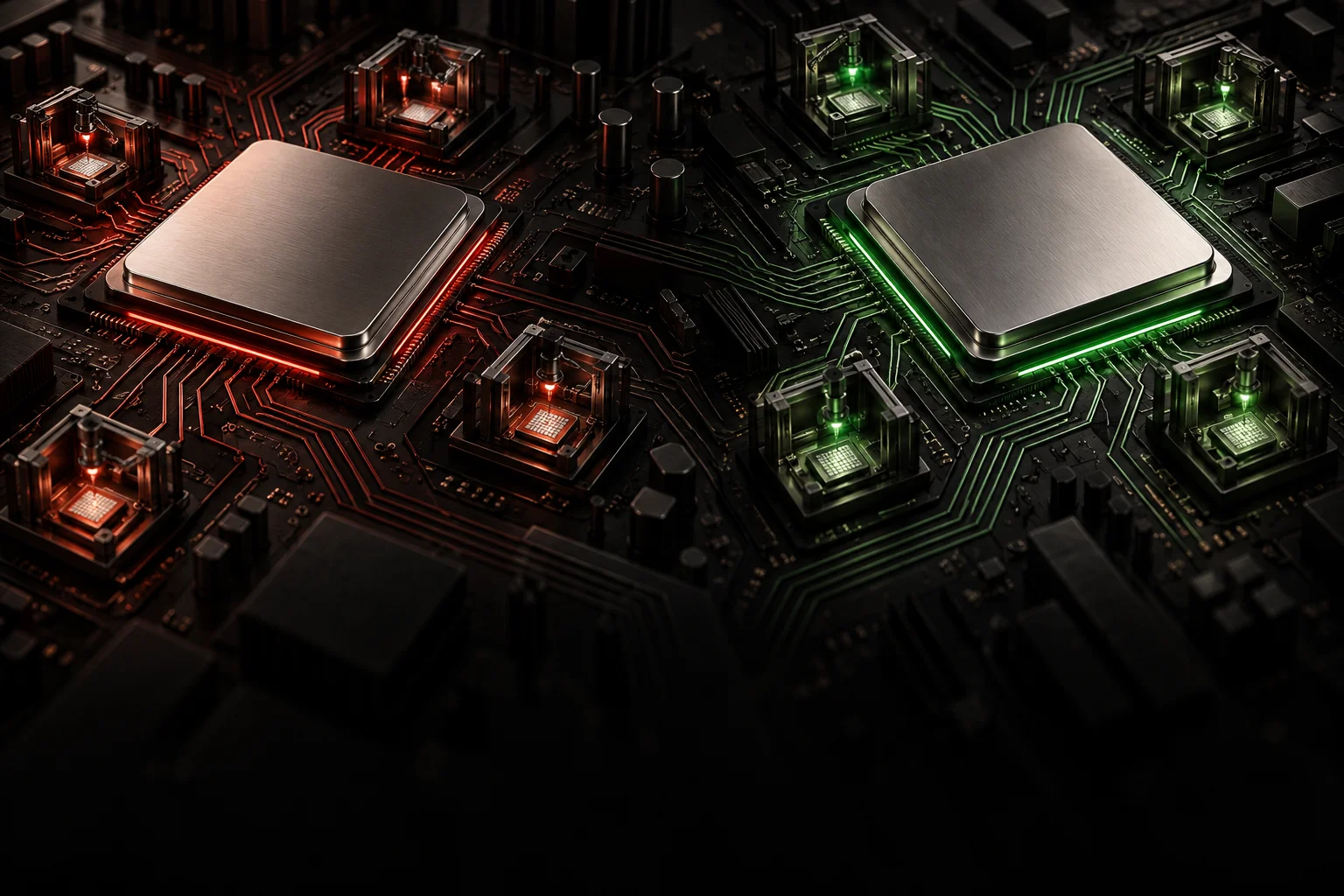
AMD wants this work to become a reason to choose its Venice-generation EPYC processors over NVIDIA Vera. Its September 18 argument favors different CPU profiles for different tasks. NVIDIA is pursuing the same market: on September 30, it announced a forthcoming Vera CPU offering with CoreWeave for workloads including isolated agent execution. AMD, NVIDIA and CoreWeave.
The competition raises a useful question: which part of the workload must improve for the agent to finish sooner? Published figures offer some clues, provided their different measurement boundaries remain visible.
An agent also waits for the programs it runs
Consider the patch again. The model requests a command. The software coordinating the agent checks the request, prepares a sandbox, an isolated execution environment, and starts the compiler. The CPU runs these programs. Results return to the model, which may propose another change and repeat the process.
Some work can overlap. Independent source files can compile on separate cores, and independent tests can run together. Other steps require a particular result. If the test needed for the next decision finishes last, it determines the agent’s wait even when the remaining tests have already passed.
This is a possible execution path, not a measured trace. The chain of necessary operations leading to completion is the critical path. Speeding up an operation on that path can shorten the task. Speeding up work that already finishes while the agent waits for something else may have little effect.
The agent’s wait is also different from the activity of the whole service. An inference server can handle other users while this agent runs its tests. A CPU-bound agent therefore does not establish that the service’s GPUs are idle.
More cores and faster cores serve different needs
A service hosting many agents needs individual tasks to make progress while supporting concurrent work. Good latency for one isolated user does not establish that the server will cope when many compilation jobs arrive together.
Memory becomes part of the competition. Programs share caches and access to main memory. Adding cores increases compute capacity, but also increases demand on those shared resources. The outcome depends on the programs and the number of active environments.
AMD’s SPEC comparisons illustrate the distinction. SPEC is a family of processor benchmarks; its throughput score aggregates concurrent copies of programs. The vendor’s notes give these estimates using GCC 15.2 and two processors per server:
| AMD comparison against Vera | Published estimate | What the ratio represents | |---|---|---| | EPYC 96-core HF configuration against 88-core Vera per processor | About 1.20× per core | Total throughput divided by core count | | EPYC 9996 platform against Vera | About 2.24× per server | Throughput of the complete platform |
These preliminary estimates concern SPECrate 2026 integer, not agent completion time. The main text and notes also use different AMD references for the per-core comparison; those configurations should remain distinct. AMD, notes 9xx6-049 and 9xx6-050.
Dividing server throughput by its core count gives an average under concurrent load. It does not directly measure the speed of one program running alone, let alone every stage of an agent’s task.
A rack comparison adds deployment assumptions
AMD also reports a modeled 3.4× throughput advantage within a 100 kW rack envelope. This combines processor counts, assumed power and a workload mix. It is not a timed experiment with two physical racks running an identical set of agents. AMD announcement, rack comparison.
Such a model can help plan a deployment constrained by electrical capacity. Its conclusion still depends on the workloads and performance inputs. A compilation service, a database and a remote tool place different demands on the machines.
Higher density is useful when enough work can use it. Intermittent requests, or tasks waiting mostly on an external API, do not automatically turn extra capacity into more completed jobs.
CoreWeave brings two different availability timelines
The September 30 announcement separates early access to Vera Rubin NVL72 systems, with Cognition described as a production customer, from the forthcoming Vera CPU offering. Those are different purchasing options and timelines. NVIDIA announcement.
The same post reports up to 4.8× higher total token throughput for SWE-2 on Vera Rubin NVL72 against GB200 NVL72. That compares inference systems. It cannot isolate the contribution of the Vera CPU because GPUs, interconnects and software also participate in the result.
An agent’s tool server can likewise be separate from the server hosting its model. A team may therefore revisit CPU capacity without immediately replacing its GPUs, provided the application supports that separation.
The benefit depends on the work being accelerated
Suppose a task takes 100 seconds, including 40 seconds of sequential CPU work on its critical path. Doubling the speed of that CPU work reduces the task to 80 seconds, a 1.25× overall speedup. This hypothetical calculation keeps everything else unchanged and assumes queueing does not change.
When requests are already waiting for CPU capacity, the effect can differ. Faster execution also frees resources for later requests. Evaluating that service requires latency under load, including slow requests, rather than extrapolating from one isolated task.
A useful comparison counts tasks completed correctly within the required deadline. It holds the agent, model, tools and success criteria constant. Failures and timeouts belong in the result.
AMD and NVIDIA now have a CPU battleground extending beyond feeding data to GPUs. For teams operating agents, a useful first measurement is the time spent waiting for local tools. That is where a processor change can begin to justify itself.
Sources and method
Documentary analysis prepared on October 6, 2026, using the October 2 research dossier and targeted checks of primary sources. LeCompute did not benchmark these processors. AMD’s ratios are vendor estimates or deployment modeling; the Cognition figure is reported by NVIDIA. The 100-second example is an illustrative calculation.
Primary references are the September 18 AMD post and its notes, the associated EPYC 9006 white paper, and the September 30 NVIDIA/CoreWeave announcement. Availability statements retain the dates of those announcements. The reviewed evidence does not provide an end-to-end Venice/Vera comparison with identical agents, quality requirements and concurrency.